A Note from a Democracy Journey Traveler - Austin Graff
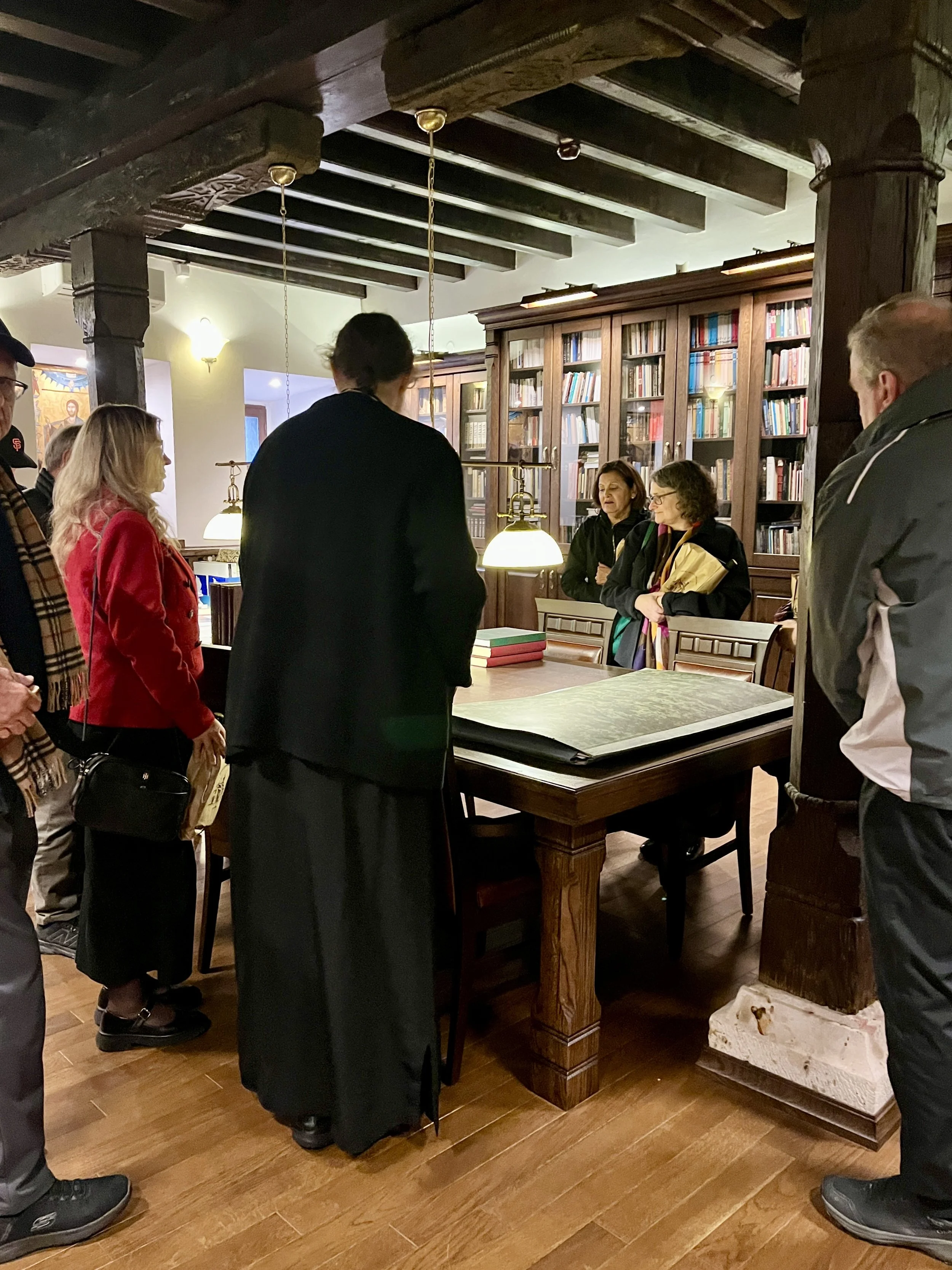
“Political systems only succeed when they respect the sacredness of every human being,” wrote Father Sava Janjić of Visoki Dečani, a monastery in Kosovo with over 700 years of uninterrupted monastic life. Inspired by the belief that every human bears the image of God, Father Sava helped house Albanians, Serbians, and others during the Kosovo War. During a conflict built on long lasting ethnic lines that still remain, Father Sava saw all people as equal. It’s only when equality for all is upheld that democracy thrives, Father Sava believes.
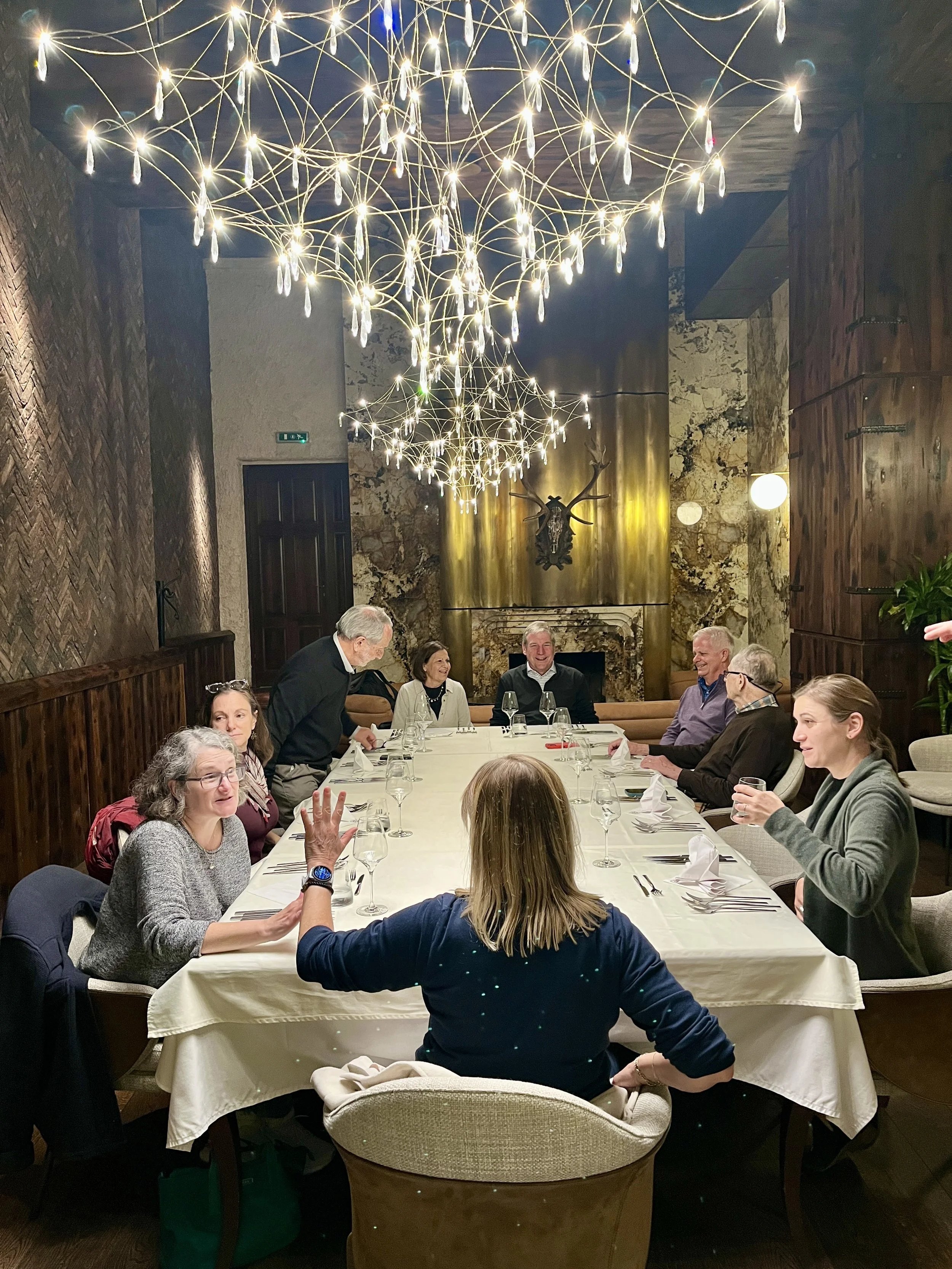
Is democracy thriving in Kosovo? How about North Macedonia? I wanted to find out. That’s why I said “yes” when my friend Elizabeth asked me to join a Democracy Journeys trip to the Balkans to help capture content and tell stories. For eight days split between Kosovo, Europe’s newest country, and North Macedonia, Democracy Journeys invited leading voices to share with our group about how democracy is playing out in their countries.
In Kosovo, Democracy Journeys, a part of Democracy International, a reputable organization supporting democracy around the world, set up dedicated time with leading voices. Through hearing their stories and talking to other locals, here are a few highlights:
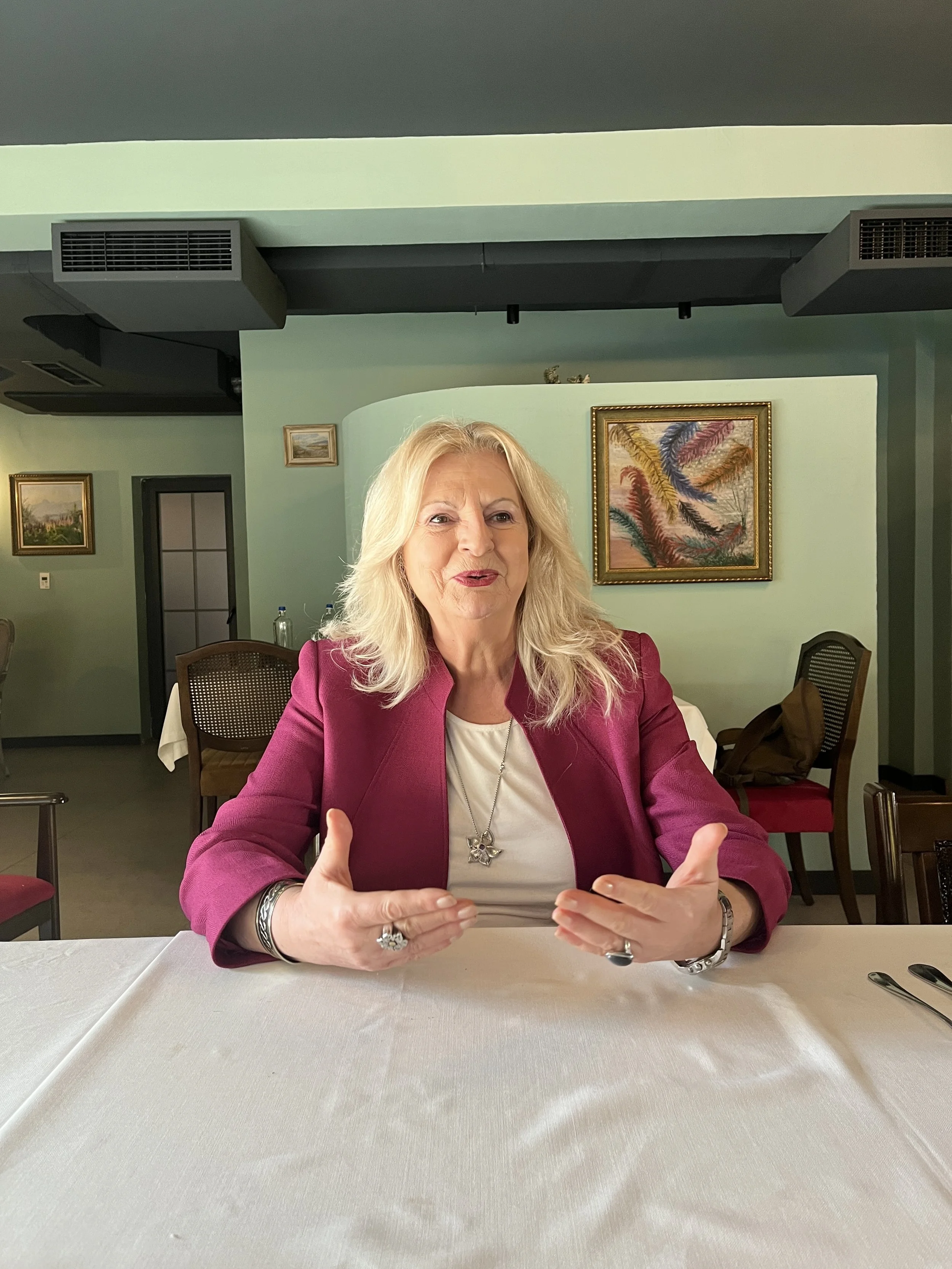
Hearing from Dr. Edita Tahiri, who helped lead the negotiations for Kosovo’s independence. A few themes:
The Kosovo Independence strategically targeted U.S. support. It worked and Kosovo became an interest on a global scale. That’s why in part you’ll see statues and streets honoring American leaders like President Bill Clinton.
When new nations form, there’s idealism. However, it’s hard to maintain. People with “small interests” can easily take control, leading to corruption and mistreatment of minority groups. She said, “Freedom should be for all, not just the majority.”
Meeting President Atifete Jahjaga, the Balkans’ first woman president. During her tenure, she helped transform the public perception of the police from fear to public service, enforced mandates to put women in leadership, and tried to talk directly to the people.
Seeing the Kosovo War through the eyes of journalists at the Reporting House. Taking a journalistic approach, the museum shares the perspective of Albanians, Serbians, Roma, and others. It also honors the 1 million people displaced during the war.
Traveling to Prizren, an ancient city in Kosovo’s southwest corner, and meeting Mayor Shaqir Totaj who spoke about how local government needs to be transparent, ethical, and performance based.
Touring Fahrije Hoti’s factory. A Kosovo War widow herself, she started a thriving business employing war widows. Mostly by hand, her team makes spreads and jarred vegetables. Her story shows the capacity for humans to rise after trauma.
Receiving inspiration from Father Sava Janjic at Dečani Monastery. A few notes from our conversation.
Diversity is not a weakness, but a treasure. The government should embody this and fight for equality for all people.
Conflict, especially in the Balkans, is often fueled by national narratives, which prejudice pours out of. That’s why a single ethnic identity in one country is wrong. The government should respect the dignity of every person regardless of ethnic lines.
It’s easy in the Balkans to feel you have suffered the most and that others are to blame. Placing blame thwarts healing.
After visiting Kosovo, our group drove across the border into North Macedonia, a country complicated by corruption. Here are a few highlights:
Grabbing lunch at Pivnica An Restaurant to hear from a local journalist on the history and current context in North Macedonia. Here are a few notes:
The land that’s now North Macedonia saw many rulers over the centuries and was later part of the Socialist Federal Republic of Yugoslavia.
Since its independence, the government has suffered from corruption, embezzlement, and lately, nationalism. The journalist noted, “People playing with nationalism are playing with identity questions.”
North Macedonia is a “captured state” where one party controls everything. When that happens, minority voices don’t have freedom.
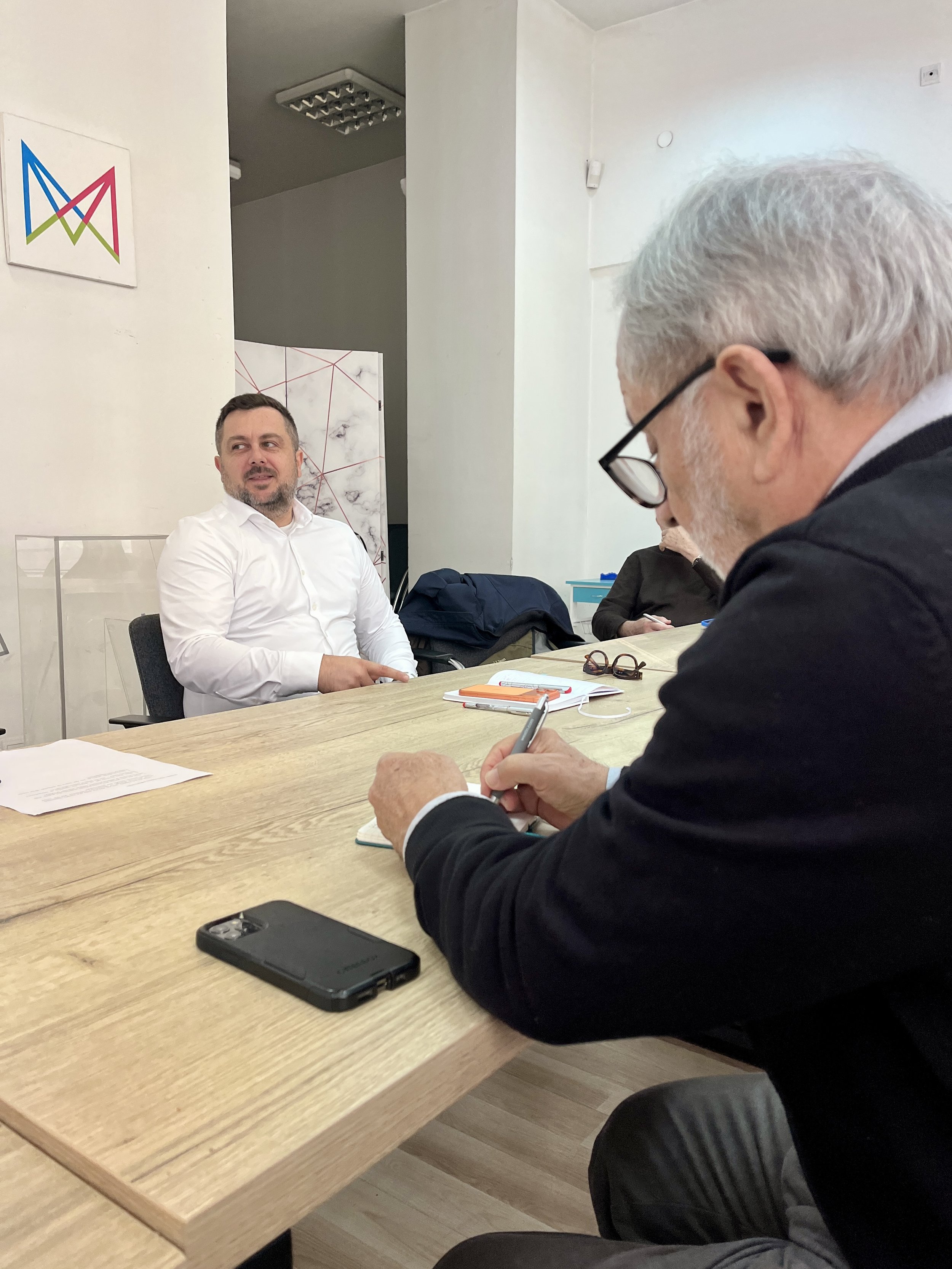
Meeting Ivana Tufegdzic and Dr. Irena Stefoska, two activists during the Colorful Revolution, who later were elected members of Parliament. A few notes:
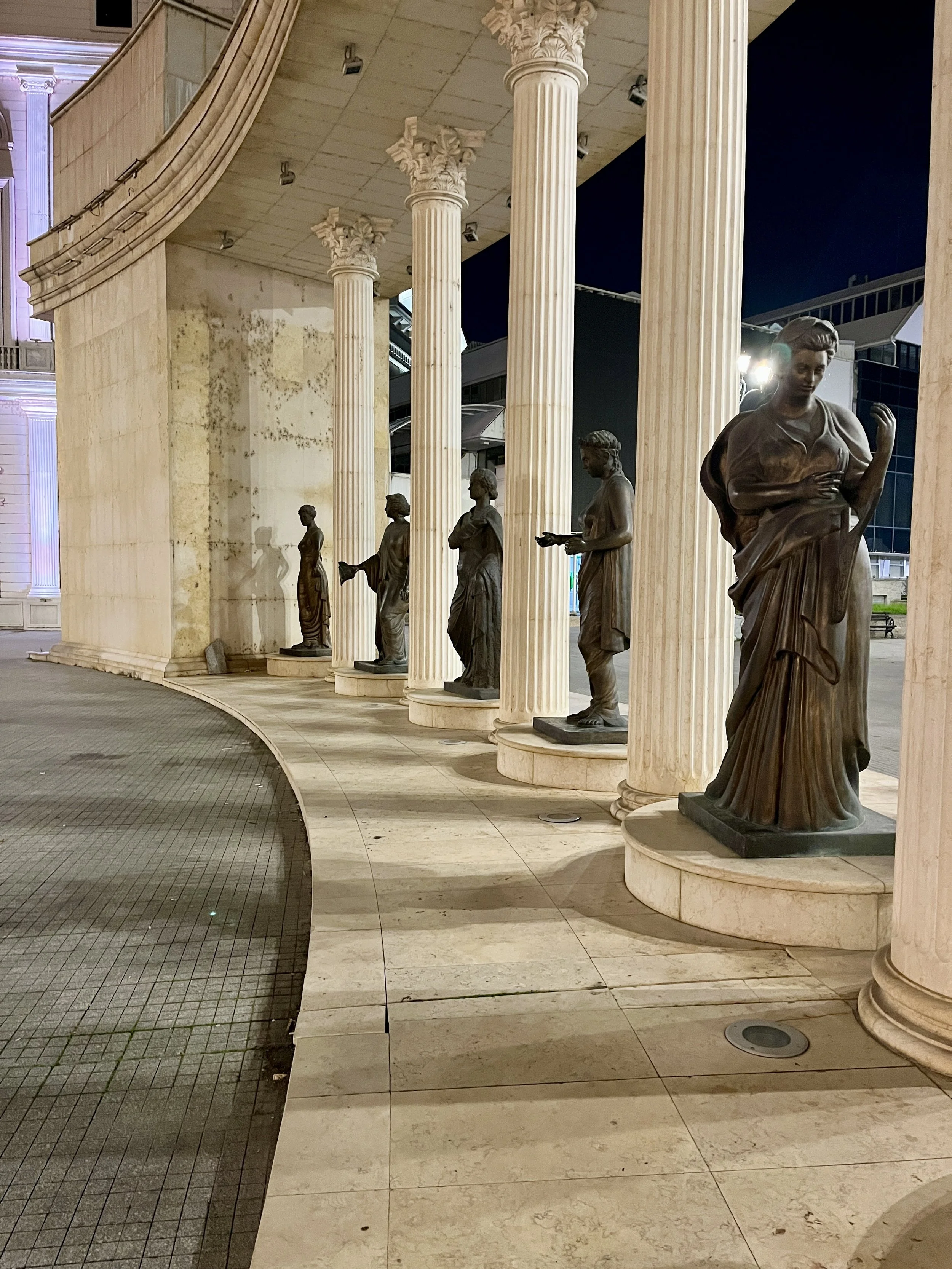
In 2014, students, professors, and others stood up to defend the autonomy of the university. In 2015, it was discovered that the government was wiretapping 25,000 citizens. Then in 2016, students, professors, and other activists took to the street, painting facades and “Skopje Project’ sculptures during the Colorful Revolution.
Afterwards, a few activists joined Parliament to enact change, but quickly became discouraged by the corruption and inefficiencies. One commented, “There’s nothing more dirty than being in politics in North Macedonia.”
Despite significant challenges in government, the activists did serve as a “conscience,” helped resolve the country’s name with Greece to further EU support, and contributed to improving human rights.
Hearing from Toshe Zafirov, an analyst, who spoke about the Kočani night club tragedy where 60+ people died due to government neglect and corruption. How the government handled the response further proved corruption. People on the ground feel “hopeless.”
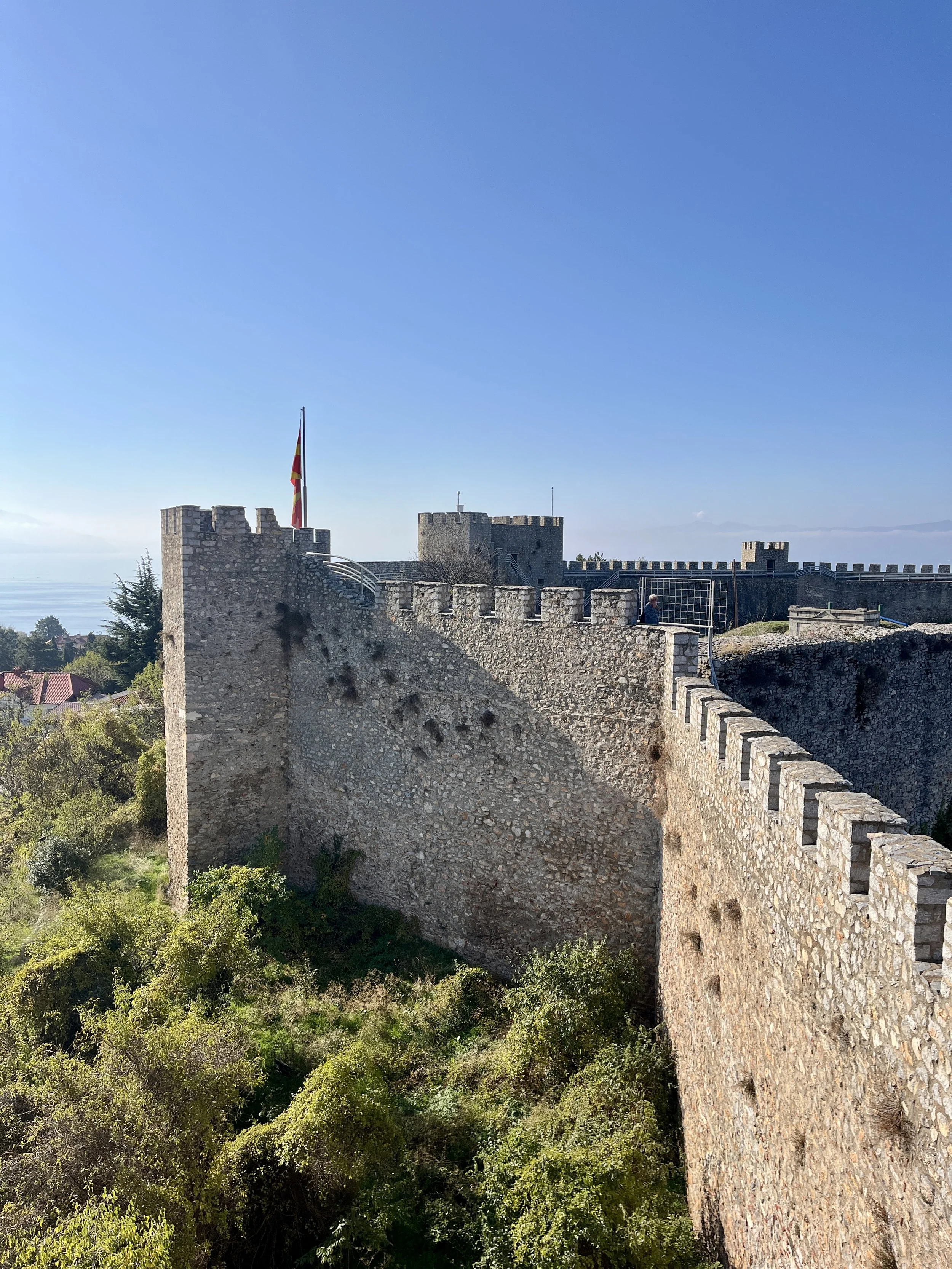
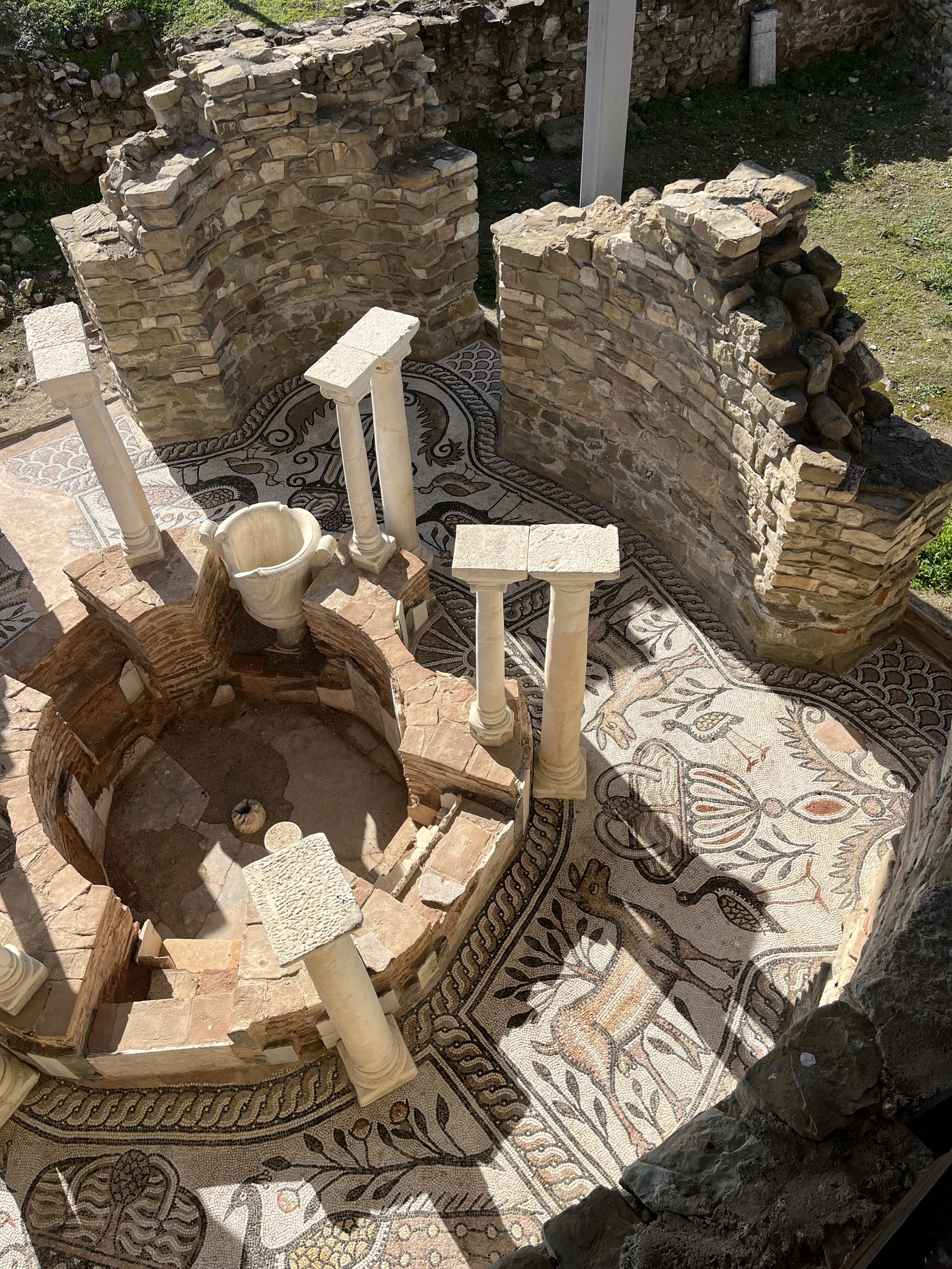
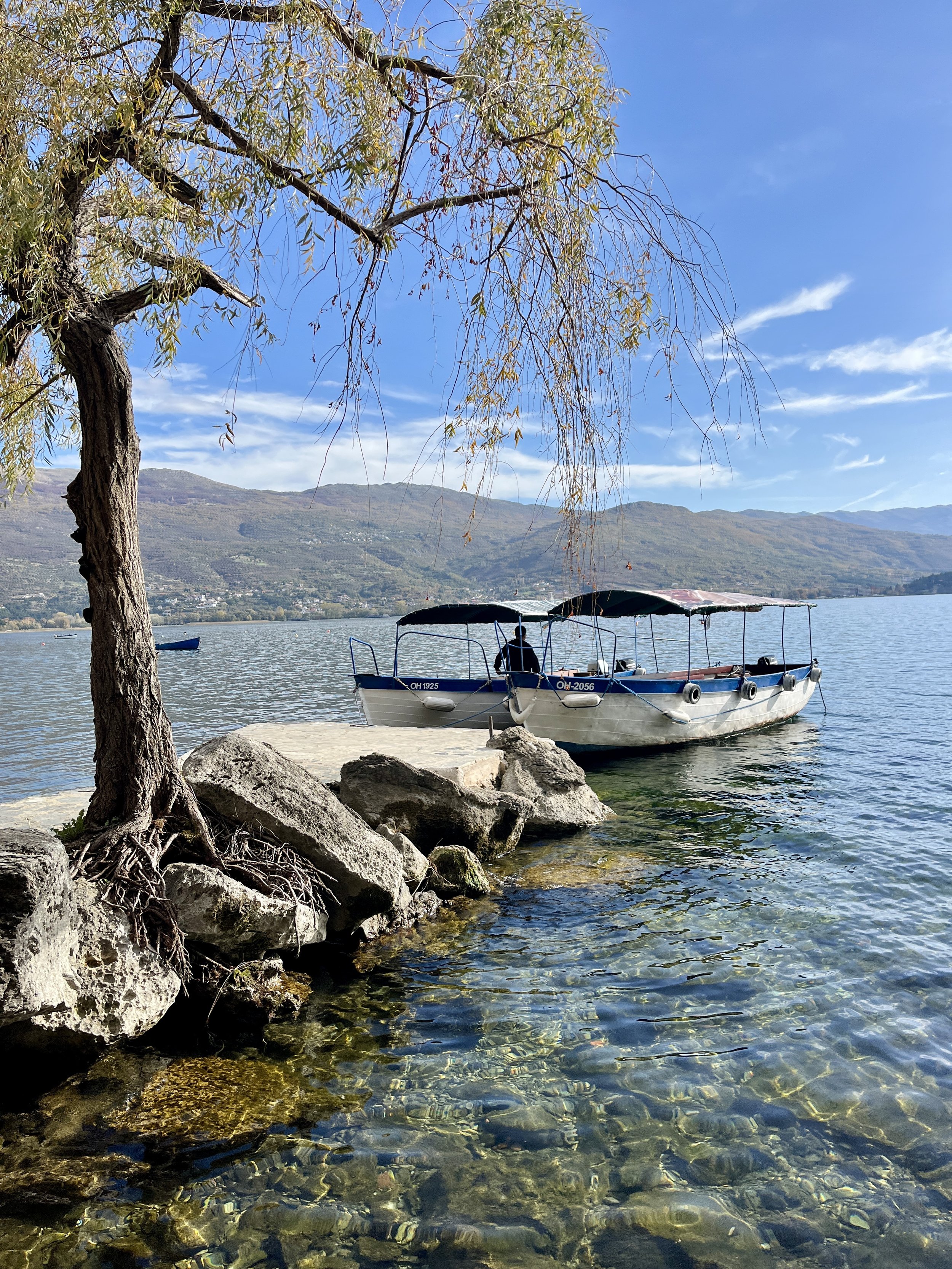
Spending a few days along Lake Ohrid and eating a meal on a chef’s home patio overlooking the water.
Ending the trip at Brzanov Winery, which produces 37 labels of red, white, rose, and orange wines. Once again, a journalist and his wife joined us. Here are a few highlights from the conversation:
It’s important for leaders to build a system that outlasts them.
Democracy is expensive and difficult when the country is more poor.
When corruption is exposed, you must learn lessons. If not, corruption is repeated.
Traveling with Democracy Journeys, it became clear their work is missional. Meeting people in Kosovo and North Macedonia who have benefited from the work of USAID, who helped fund Democracy International, inspired me. If Democracy Journeys succeeds, it helps uphold Democracy International so they can continue their democracy work around the world. If you have space and resources for travel, consider Democracy Journeys. Their Kosovo and North Macedonia trip blends sitting with leading voices, seeing ancient cities, and building community over delicious food and noteworthy wine. It’s worth the time investment.
Austin Graff